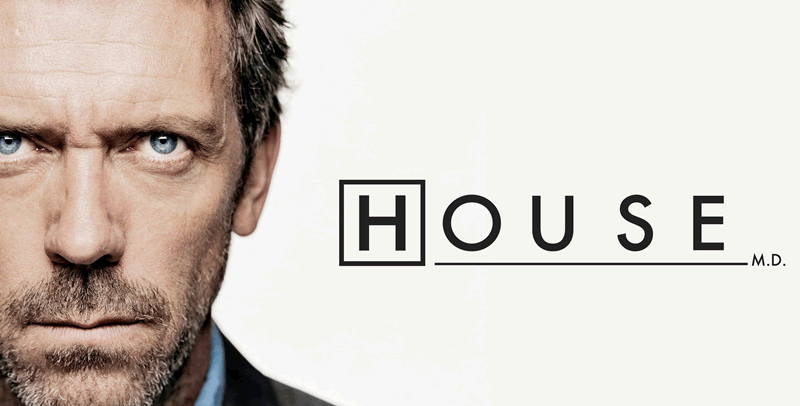
Somehow a show about “medicine” and “doctors” is more about psychology than anything. The clear pathology that House displays essentially every episode would never ever be allowed. If one were to take any of this seriously then it only works in perspective if all the characters are Jungian shadows in House’s head engaging in some sort of cerebral self-examination.
The Shadow allegory holds more strongly in the first few seasons as a person only has so many shadows. However even the patients could be seen as problems for House to solve as a means to incrementally examine his knowledge, beliefs, and experience while moving towards reality. This is mostly just me making high-minded examinations while I watch entertainment television which ironically has its own diegetic dumb day-time television doctor show, a meta-acknowledgement of its non-reality. Though for me this is how I have fun watching television, scrutinizing it and trying to pull some greater meaning out of what is essentially, entertainment. With absolutely zero medical experience it’s not like the constant volley of medical terms has any real meaning to me nor should it be used as a replacement for real world medical knowledge. Which is why I think the character’s constant need to psycho-analyze each other is reflective of the real focus of the show: psychology and sociology. In the end that’s all one can really hope for that at least it’s fun to watch and watching House be House in House is fun.
Just to entertain possibilities, House could be seen as a doctor who’s lost themselves in their Vicodin addiction and he’s making his way through it by working at a mind palace, the hospital, populated by shadows who are projections derived from real people in his life. Wilson is his conscience though being house’s conscience means he too has his own problems. The various female characters like Cuddy or Cameron are tokens of his sexual objectification, desires, and inability to treat them like actual people. Though he doesn’t treat anyone like real people, even though he wants to heal his patients, they are more puzzles than people. Someone like Foreman or Chase are who he could’ve been or couldn’t be and uses them as more counterbalances against his inherently arrogant expertise.
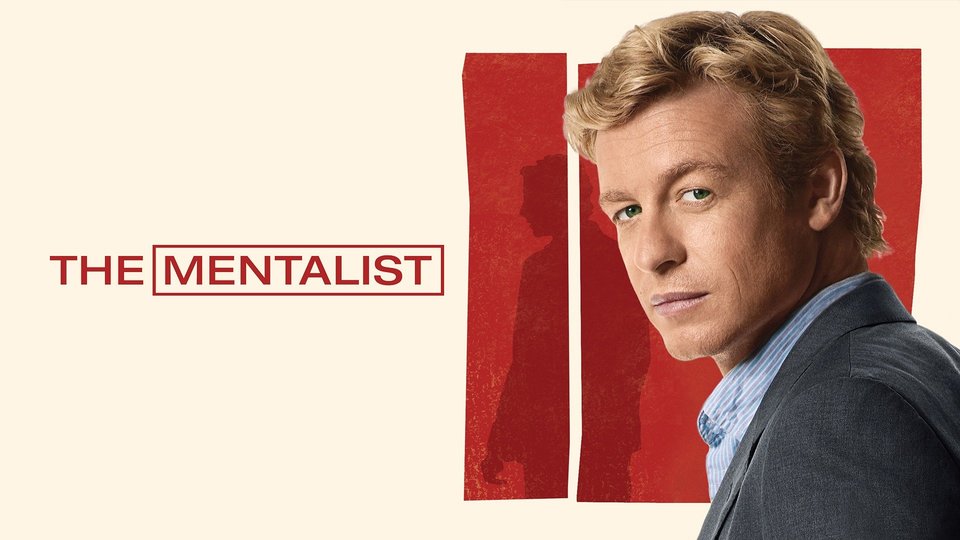
I have an idea for a new TV show: a detective who consults for the police in California. He has exceptional …detecting skills which he uses to solve crimes. They…*ahem* I meanHe‘ll have father issues resulting in a currently strained or dead relationship, though his father will have some influence over his desire to solve crime, his ability to do so, or both. There will be a female counterpart who acts more as a stabilizing force, either as a romantic interest or (un)willing partner (in crime solving). They will also suffer from severe emotional or psychological issues starting with selfishness and a lack of general maturity, which may or may not play a part in their crime-solving. There will be a partner, either the aforementioned woman or another who’s a close friend. They will all be influenced by Sherlock and make others look like fools. If this sounds familiar it’s because I was describing Monk, The Mentalist, Psych, and probably a few other Californian-Detective/Consultant-for-local-police procedural crime drama.
Monk, Jane, and Shawn all display behaviors often resigned to children. For one Monk is often painted as child-like with his dependence on a helper and general fear of things. One problem with this is as much as he may seem to grow over the first few seasons, he never does and if nothing else increasingly more of his phobias and neurotic behaviors are exposed. This contrasts from Shawn who starts out emotionally stunted, attention-seeking, and arrogant ends up all those things but can admit it. I felt his “growing” would be the main arc of the series, but he never really does grow (much). The show itself seems to be a backdrop for Shawn and Gus’ 8–12-year-old fantasies allowing them to play out mini-fantasies under one big one ‘Detective’. It makes sense that he cannot grow up but his romance, and the obvious main plot, demands it. He admits his childishness and that is his growth after about decade. Jane is another beast altogether, while he does appear childish like the others it is hard to know how much of that is a showman’s mask hiding the truth beneath. It would not be difficult to derive that Jane after a certain point mostly drops morality as a concept to single-mindedly achieve his goals. If it weren’t for consistent charity as a byproduct of his schemes he could be described completely as a ruthless manipulator. Here his ‘romance’ seems more like a healthy chemistry with someone else following his tragedy, an anchor for his mental stability. So, he may appear childish but he’s the only character to mature across the series, not in the typical child-to-adult but more the family-man-turned-vengeful-detective. His is a growth into an anti-hero.
All three owe a great deal of their abilities and weaknesses to their fathers, oddly. Raised by a single mother after a certain point Monk’s father’s claim to fame is reading Monk Sherlock Holmes and not being able to handle his family’s persnicketiness and leaving. From what I’ve seen his father’s absence is a severe factor in his development but it’s hard to know how much. As for his abilities, Monk gets by on his Compulsion that everything be to notice details and shrewd intuition to piece it together. Not directly inspired by his father but is it possible it pushed him to be a detective? Jane despite any innate talent he had, was trained by his father from an early age to read people, con, and perform. There is an obvious lack of warmth in their relationship which could account for Jane’s inability to physically express with others and only really express via gifts and knowledge. It’s pretty obvious his father is directly responsible for Jane’s emotional failings and his detective accomplishments. Shawn is similar to Jane except in this case Shawn still has his father in his life. While Jane’s father is a ghost outside of Jane’s childhood, Shawn’s father is a constant presence. Shawn himself holds a grudge against his father for a variety of reasons. The first and largest is his viewing his father as the ‘bad guy’ in his parents’ divorce, which his mother later admits was her fault. Even after this Shawn has struggles to appreciate his father or at least express it directly. It’s fact that Shawn was trained from a young age to be a detective like his father and this iron insistence is most likely the bane of their relationship. On one hand Shawn despises the shackles his father put on him in the form of expectation but on the other hand the talents his father helped him cultivate enable him to do what makes him happy. Acknowledging that would prevent Shawn from having an excuse to keep his father at arms’ length, a child throwing a 20+ year tantrum because daddy made him do something. Watching their relationship, it’s obvious they love each other but seeing Henry treat Shawn the way he does it’s also obvious where Shawn’s emotional problems arise (aside from the divorce).
I’m not one for romance so I’ll keep this brief. Monk needs a female helper to be a circular peg for the square shaped hole in his heart. Jane develops an honest relationship with another woman after his wife’s death and Shawn spends roughly a decade twiddling his thumbs, being a child, or dating someone else instead of being open. Each suffers to express and connect with the other sex, and this becomes a crucial part of their development/growth. Almost as if the female counterpart is filling a ‘motherhood’ role in requiring the boys to ‘grow up’. This would make sense as each has problems related to their mother but only their fathers have a heavy presence in their lives’. Just conjecture.
Much like Sherlock had Watson, they each need an associate/helper/assistant/etc. Also, like Watson they will be full characters with their own knowledge that helps the detective show off their brilliance. Monk’s assistant is fundamental to his daily functioning aside from providing a balancing line of thought. Jane uses his associates like pawns in a chess game every episode for a checkmate. They usually don’t know they’re being used but after a while become accustomed to not knowing and have faith in Jane. This is mildly ironic in that Jane is likely a sociopath and the only reason this isn’t a bad thing is because Jane has a soft spot for families. Shawn is more like Monk here in that his arrogance, childishness, or another failing causes his frequent downfall only to be saved by those closest to him, especially Gus and his father. Another point for Psych is that like Sherlock Holmes and Dr. Watson, Shawn is detective-adjacent, and Gus too is medical-field-adjacent with his knowledge of medicine being crucial in many of Shawn’s cases.
Either on accident or purpose they all often leave their peers, criminals, and others dumbfounded, feeling foolish or some other humiliation. Monk does this with his ability to connect seemingly random details, and there’s even an episode where they poke fun at this concept by introducing someone who to other people does exactly what Monk does, but Monk doesn’t see it and thus sees the con it actually is. To The Mentalists’ credit it expertly hides Jane’s knowledge so at any time it may seem like he doesn’t know anything or that it’s all part of some elaborate plan. The vagueness of this often means Jane ostensibly knows everything from the beginning and already has mechanisms to expose the criminal of focus. This makes Jane unique in that he’s the only one who not only amazes his peers but (at least for me) his real-world audience, much like a showman it’s all a performance. Shawn, I think, provides a decent middle-ground. When he surveys and notices those details are highlighted for viewers, so we know what he sees. Like Monk his ability to connect separate details wows his peers while we can follow along due to the given clues.
Bottom line is that there’s probably more weird parallels and differences. Seeing how the archetype of Sherlock is twisted and changed for new stories is interesting though not always successful.
Bonus (short) Reviews:
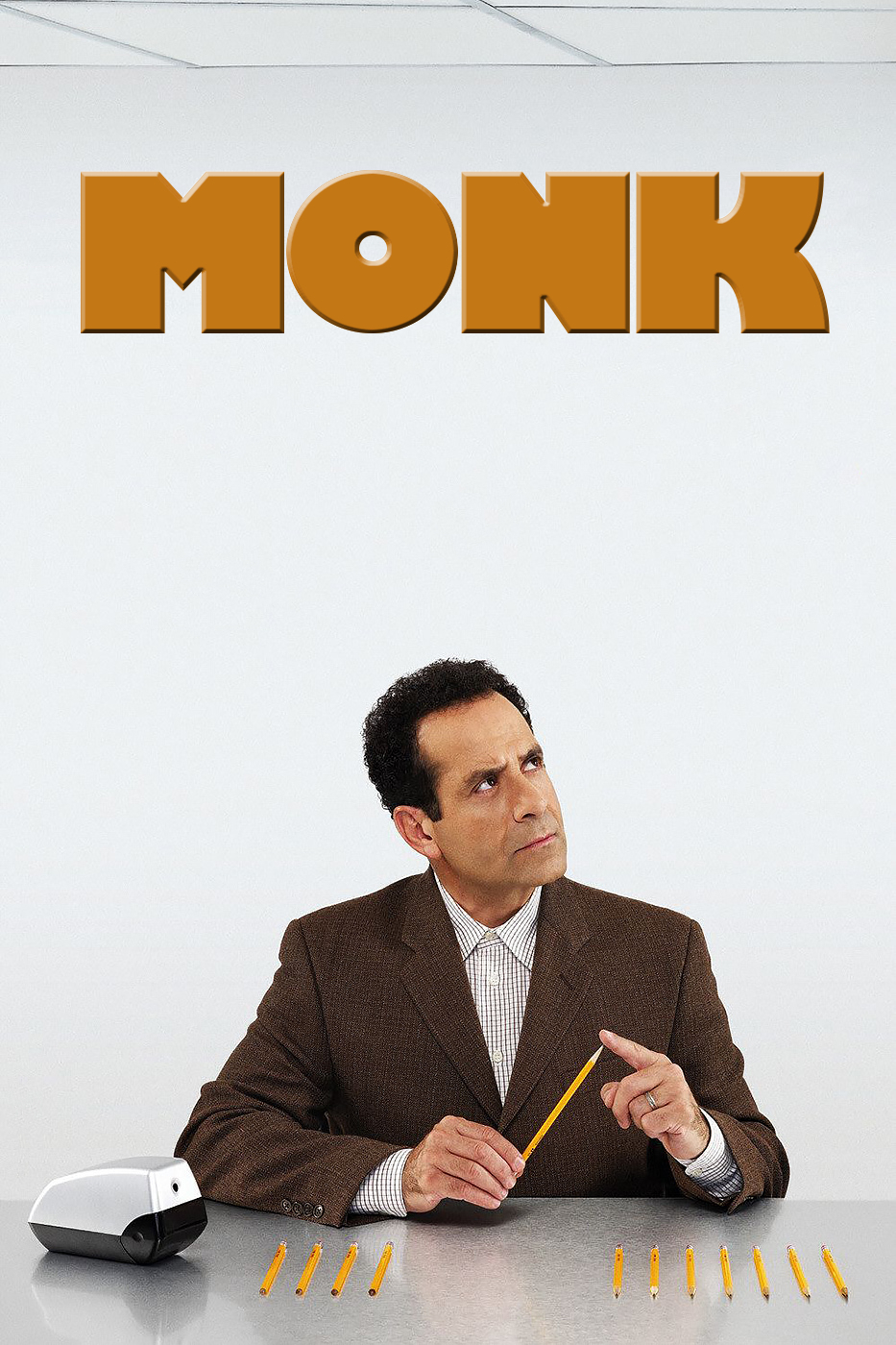
Monk – I had family who watched Monk when it aired on TV so at best this presses my early-2000’s-nostalgia-button but beyond that I don’t really like this show. It does have some good episodes and probably the most consistently good writing, dialogue, and acting of the three. My problem boils down to the treatment of Monk himself. This stings me in two ways: 1. it seems exploitative, using his fragile mental state as a punch line. In a way it’s gross and it makes me feel gross when they take it too far. 2. Given #1 this really boils my blood when there doesn’t seem to be any consistency to Monk’s personal rules and the writers just use the “hes mentally ill card” whenever they need a joke, to push plot, resolve crimes, etc. Its lazy and absolutely undermines the character.
The Mentalist – Coming back to watch this was a little difficult. At first I bounced off watching the not-so-great acting sometimes, but that’s the side characters. Everyone watches to see what Jane gets up to. Patrick Jane is one of the best developed TV characters I’ve seen and Simon Baker really warms up to the role by season 2. He is eternally a joy to watch. The audience is given little to no insight into how much Jane knows, what he’s planning, or if he even knows anything at all. Most episodes are able to create a small suspense over “how omnipotent is Jane really?”. Like most TV shows the overarching plots can be a bit of a drag. Of the three this has the best lead character and the solutions to the crimes are the most entertaining.
Psych – What if you and your best friend at 12 years old imagined you were a modern Sherlock & Watson who were also somehow able to simultaneously satisfy every other childhood desire at the same time. If in the very end it all turned out to be a dream in Shawn’s head, I’d believe it. As expected then very little has any stakes and most of it just seems like a fun time. So the plot never matters and character development is non-existent (even though that’s supposed to be the main plot) but Cary Elwes shows up to be Cary Elwes and it’s great. This show is just silly pineapple-laden good times but also does more to show what the lead sees than the others. Returning to this as an older person, it actually lost some points in that watching Shawn be a 30 year old child made me want it to stop.


 ooglykraken