

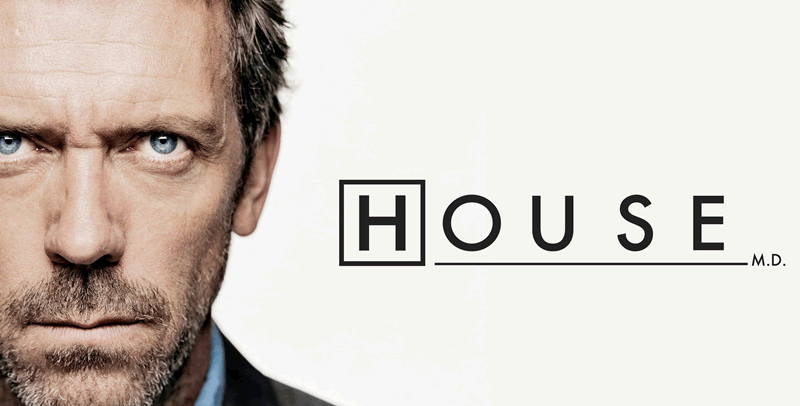
Somehow a show about “medicine” and “doctors” is more about psychology than anything. The clear pathology that House displays essentially every episode would never ever be allowed. If one were to take any of this seriously then it only works in perspective if all the characters are Jungian shadows in House’s head engaging in some sort of cerebral self-examination.
The Shadow allegory holds more strongly in the first few seasons as a person only has so many shadows. However even the patients could be seen as problems for House to solve as a means to incrementally examine his knowledge, beliefs, and experience while moving towards reality. This is mostly just me making high-minded examinations while I watch entertainment television which ironically has its own diegetic dumb day-time television doctor show, a meta-acknowledgement of its non-reality. Though for me this is how I have fun watching television, scrutinizing it and trying to pull some greater meaning out of what is essentially, entertainment. With absolutely zero medical experience it’s not like the constant volley of medical terms has any real meaning to me nor should it be used as a replacement for real world medical knowledge. Which is why I think the character’s constant need to psycho-analyze each other is reflective of the real focus of the show: psychology and sociology. In the end that’s all one can really hope for that at least it’s fun to watch and watching House be House in House is fun.
Just to entertain possibilities, House could be seen as a doctor who’s lost themselves in their Vicodin addiction and he’s making his way through it by working at a mind palace, the hospital, populated by shadows who are projections derived from real people in his life. Wilson is his conscience though being house’s conscience means he too has his own problems. The various female characters like Cuddy or Cameron are tokens of his sexual objectification, desires, and inability to treat them like actual people. Though he doesn’t treat anyone like real people, even though he wants to heal his patients, they are more puzzles than people. Someone like Foreman or Chase are who he could’ve been or couldn’t be and uses them as more counterbalances against his inherently arrogant expertise.
 ooglykraken