
The Hero We Deserve

My familiarity with “The Tick” is limited only to the recent Amazon series (2016), not the one with Patrick Warburton, so if it doesn’t follow in the spirit of the original material I cannot comment. However what it does do is make the last decade or so of profuse heroic media look as awful as I think they are (I mean specifically the ridiculous output of Marvel and DC and how not great most of it is). The Tick follows Arthur Everest and his new acquiantance the eponymous The Tick, a seemingly invulnerable blue-suited hero who is pushing Arthur to be a hero as well.

Our giant blue friend The Tick knows little about himself or his own past but is driven by “Destiny” as he calls it, to act as he does. It is destiny in his mind that makes him want to encourage Arthur to take up the mantle of hero and be the best Arthur. Between them they have the brains and brawn dichotomy with The Tick being an overpowered non-intellectual and Arthur a quick-thinking, effective planning, somewhat cowardly squishy person. Arthur being the logic of the duo can’t “hear” destiny as The Tick does but can effectively turn his friend’s desires into plannable actions. It’s here in this dynamic that heroism is explored, in one of many ways. Despite being a regular person Arthur learns to become responsible in taking action, no matter how small, to help others. The Tick is innately called upon by “Destiny” to do this but doesn’t always know the best way. They learn from each other, support each other, and in doing so help others.

There’s more I could write and with time more effectively could I write it but this is just a call to watch what a proper Super-Hero media can be in an era where the pure ideals of yesterday are covered in the equivalent of a child smashing action figures together in ugly CGI “action”. If you do watch this be warned that season two ends in a cliffhanger(s) and we’ll likely never get a season three.
Artifacts

If you walk into my house, it won’t be long before you notice the giant “shrine” of video games and paraphernalia. Comprised of several bookshelves (now just one) full within and without, even an uninterested observer could recognize the time and money on display. Not to reduce my collection to monetary value but only to explain what maybe a next thought would be: “That’s a lot of time and money for games.” or “So much effort for just children’s’ toys.”

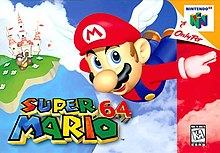
In reality this isn’t too far from truth though it overlooks any deeper purpose at present. Such a collection has seeds in childish wishes but in mature hands can become more than just a sea of escapist nostalgia. Nostalgia’s historical meaning of “homesickness” reveals its painful implication that the pure feelings of that “home” in your memory no longer exists. That memory which tugs at the mind and heart is an idolized representation of some other time or place which exists exclusively in your mind. Philosophical drivel aside the importance is that the shrine is not to video games, but to my video games. Many people have played Super Mario 64 but we all will have our own unique experiences with it. Each one a catalogue of memories and feelings hidden behind the star-emblazoned door. So my copy of SM64 may not be the exact physical copy I grew up with but going back into the game I remember playing in my brother’s room on a diminutive CRT which fit on a milk crate. He had a suspended bunk bed and had the TV under it making for a rather cave-like setting. I couldn’t tell you the color of the wall, how it smelled, how I felt that day or what my brother looked like then, but I remember talking to him about SM64. I remember watching him do everything I couldn’t and then trying later. I remember seeing him progress through the game and show me places I’d never make it to on my own. All these memories and more exist in my head but in my collection, they can have a tangible totem.

There’re not only the totems which take something’s place there’s also the true relics like my 5th anniversary collection of Devil May Cry’s first trilogy. There’s nothing intrinsically interesting about it, however it’s the exact collection I bought as the first rated M game I could legally buy. A certain freeing action that was one of many on my road to free expression as a legal adult. It too also has other memories like how a friend, and I took turns beating the games over two days completing them once for DMC one (my first playthrough), then twice for two, and four times for three (because it’s so good). Ok so memories, totems, relics, nostalgia, and it all blends into a quasi-religious appreciation of yesterdays. For some. I don’t idolize the games in that way. What I see is a fulfilled childhood achieved partly through these specific material means. Where I was able to develop this nostalgia because the games I played were in vogue. Those who come after me won’t have the same context when playing them, but I can infuse my shrine with the ability to hopefully help set the contextualizing mood I had when I played them. It is here in this idea the true purpose starts to come into focus. The preserved packaging and manuals helping someone who isn’t me see something they didn’t have, in what I did have. To others some feeling, and information is meant to be given. So, a shrine this is not but rather a museum. A container for my nostalgia to take on a crystallized form and express itself to no one in particular.

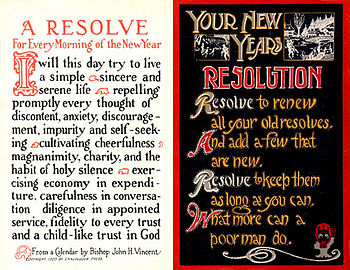
Don’t Make New Year’s Resolutions

Every year instead of telling yourself you’re going to do this thing or that thing this year look at who you are and think about who you want to be. All year every year you should be striving to be that person not just January 1st. Instead of waiting for an arbitrary day to try and change, make a plan that overcomes the difference between the you now and the ideal you. Then instead of resolutions every year use it as a moment of self-reflection trying to identify how you failed, and how you can better approach your changes. There’s nothing wrong with failure, usually, if you can use it to learn and grow. Accept that you can make mistakes if you can objectively allow yourself to grow from them. In example if you want to run one mile everyday it may be too difficult to just do that right now. Instead run what you can and over time add onto how much you run every day. It may take weeks or even months but with constant effort it will come. With that constant effort comes a constant drain on your energy and motivation. So, pick effort that’s achievable and build up.

Instead of expecting yourself to just be immediately better because the calendar went up a number examine the ways you can plan for that change over the year. Then every year re-appraise that plan and whether it needs to be more or less ambitious, more or less taxing, more or less important. Every day is a chance for improvement and acknowledging the best way to change and planning around that is more effective than just changing all at once.

(If you’re a reader the books Atomic Habits by James Clear and Designing the Mind will help identify, create, and improve those plans more than my little spiel.)